
Freedom, Experimentation, and Technique: A Legacy in Glass
Museum of Glass Curator of Education and Legacy Projects Susan Warner had the privilege of speaking with Tagliapietra about his career, his time at Museum of Glass, and the upcoming Lino Tagliapietra Legacy Gallery. Read her full interview below.

Lino Tagliapietra with team members Jen Elek, Nancy Callan, and Dave Walters during his final bow in the United States, 2023.
Lino, you arrived in the Pacific Northwest at a very significant moment in the evolution of the Studio Glass movement. You had a momentous influence on three generations of artists, and your career flourished. How do you view your legacy?
When I think about legacy, I don’t think only about the pieces that will remain. I think about the people—the artists I met, the assistants I worked with, the students I taught, and the friendships that grew over time. If my name is remembered, I hope it is connected to sharing: sharing knowledge, sharing discipline, and sharing the idea that tradition is something living. I have a positive outlook. I believe many European and American artists will continue to develop historic techniques: Roman, Venetian, Muranese. Not by repeating them, but by carrying them forward through their own voice. For me, glass has always been a way to stay curious. And if my work has encouraged even one person to stay curious and to keep pushing, then I feel I’ve done something meaningful.
You gave so much to the Pacific Northwest through mentorship, teaching, coaching, and inspiration. What did the Pacific Northwest give to you?
The Pacific Northwest gave me something I didn’t expect: a new kind of freedom. In Murano, I learned the most important foundation: discipline, respect, and technical knowledge. But when I came to Washington, I found an environment where experimentation was welcomed, where the artist was encouraged to take risks and to search for something personal. That freedom changed me. It gave me space to grow, to imagine forms that were not possible before, and to understand that glass can hold not only skill, but also emotion and poetry. The Pacific Northwest became a place where I could work very hard but also breathe. And over time, it truly felt like another home.
Who are the mentors and artists who inspired you as a young artist? How did you channel their support into your development as a world-renowned artist?
On a technical level, I was inspired by the Murano masters. In Murano, you learn with your eyes before your hands. You watch every movement. You repeat until it becomes part of you. That tradition shaped my discipline and taught me respect for the material, for the team, and for the craft. On a human and artistic level, I was fortunate to know great people: Giovanni Ferro, Enrico Moretti, Archimede Seguso, Andries Dirk Copier, and many more. Each one showed that being an artist is not only about talent, but also about character, humility, and responsibility. The Venice Biennale was also a strong foundation for me. It opened my eyes to contemporary art and to the power of culture. Later, I was very drawn to Mark Rothko, especially in how color can carry silence, depth, and emotion. That kind of art stays with you.
What advice would you give to the next generation of young glass artists emerging today?
Have passion and curiosity, and don’t be afraid of making mistakes, because mistakes are where your real education begins. Glass is demanding, and it does not forgive easily. But that is why it can make you strong. It teaches patience, humility, and attention. I would also encourage artists to learn the technique deeply because it gives you freedom. But after you learn it, don’t stay there. Use it to search for your own voice. And be generous. In glass, nobody grows alone. The most beautiful tradition is not the object; it is the knowledge passed from one person to another.

Photo by Pavel Verbovski.
You have given the Museum of Glass a very important art collection from your forty-five years in Washington State. From this collection, MOG has curated a checklist for the inaugural Lino Tagliapietra Legacy Gallery exhibition, Lino Tagliapietra: Maestro. What are the three most important learnings you would like visitors to take away with them after viewing your show?
The first would be a freedom of judgment. I want visitors to feel free to look, to feel, and to respond in their own way. Art should not be something you are afraid to understand. It should meet you where you are. I would also want them to gain a sense of tolerance. In glass, teamwork is everything. You learn to listen, to accept differences, and to respect the rhythm of others. The Hot Shop teaches you that many hands can create one vision. Finally, I hope they feel gratitude. I feel grateful that people come to see the exhibition and take time to understand what has been done during this part of my life. This work represents decades of effort, risk, failure, and discovery, and I am thankful it can be shared.
What should artists take away from your show and the associated video archive?
I hope artists feel the passion behind the work and the reality of the process. The archive shows that nothing arrives quickly. It is repetition, commitment, and constant learning. It also shows how important a team is. Glass looks like magic, but it is built through discipline and trust. I would like people to understand the technical skills not only in my own work but also in the work of everyone I collaborate with. My story is not only about me. It is about collaboration, about the energy of a hot shop, and about the respect that grows when people dedicate themselves fully to something difficult.
Museum of Glass has become your home away from home Hot Shop. You led 19 residencies here, and we curated many exhibitions on your career between 2008 and 2019, one of which travelled nationally. What is it about the MOG Hot Shop that you value?
The Museum of Glass Hot Shop gave me something rare: a feeling of trust and freedom. I could pursue ideas without limitations, and that gave me the courage to explore. When you work with glass, you need a place that supports you not only technically, but also emotionally, because the work can be intense. The assistants made a huge difference: their skill, dedication, kindness, and constant willingness to help. That kind of spirit stays with you. Over nineteen residencies, MOG really did become a home away from home, a place where I could return and feel the same energy, work, respect, and a true love for the craft.
As a major/permanent exhibition at the Museum of Glass, the Lino Tagliapietra Legacy Gallery will support curricula for numerous school districts and students at both the K-12 and university levels. What would you like these students to understand about you and your artwork? Why is it important for students to have access to Museums?
I would like students to understand that the work is built on passion, commitment, and curiosity. Technique matters, but curiosity matters just as much. The desire to keep discovering is what keeps an artist alive. I want students to feel that dedication is something beautiful, not a sacrifice, but a path. Museums are important because they educate, protect culture, and inspire. When you see art in person, you understand scale, detail, and presence in a way that no photo can give. Museums help young people imagine what is possible. They show that creativity has value and that art can shape a life.
What does Museum of Glass mean to you? Do you have any advice for us moving forward?
Museum of Glass enriched me in many ways. It allowed me to work, to gain experience, and to meet extraordinary people. It became a place of growth not only professionally, but also personally and artistically. When you find a place where you can create freely and be supported, you never forget it. My advice going forward is to protect what makes MOG special: the freedom, the education, and the living energy of the Hot Shop. The role of a Museum is to educate, to show, and to keep knowledge alive. It is important to nurture personal voice and to keep passing passion forward. I hope this gallery can help carry that mission, so future generations can learn, feel inspired, and continue the journey.
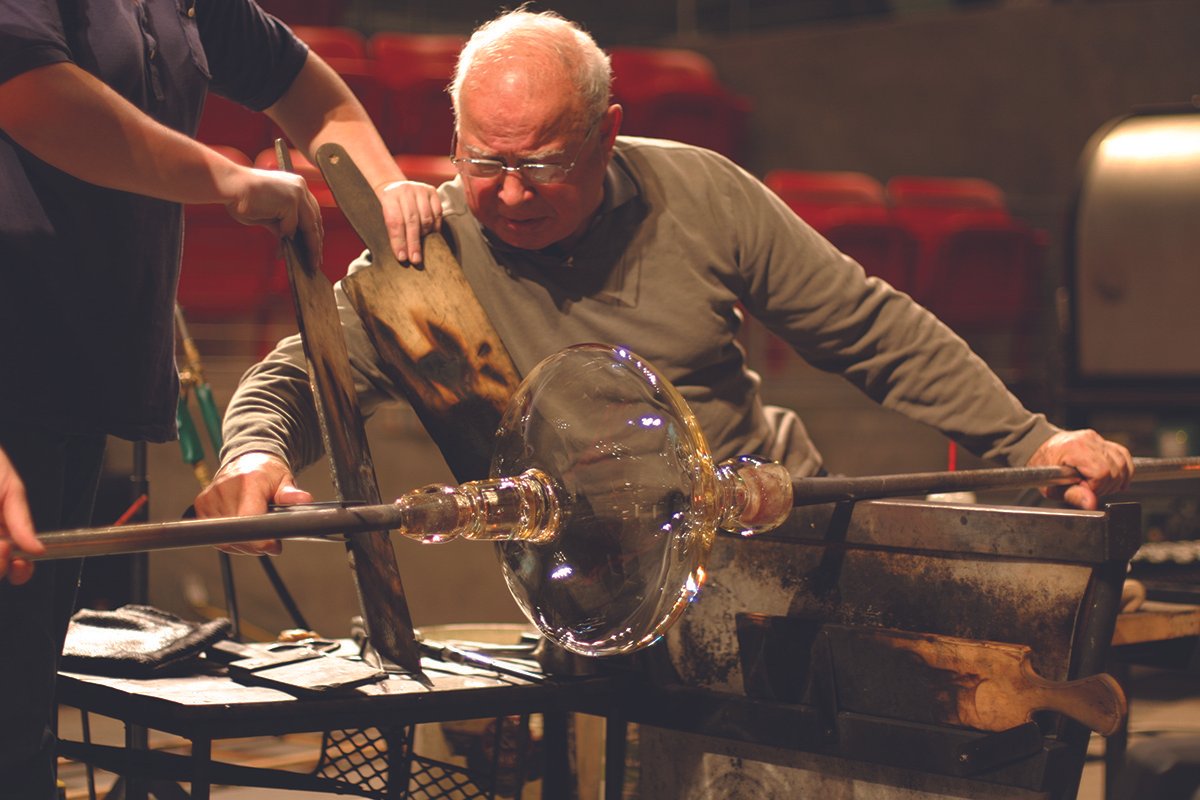
Photo by Ken Emly.
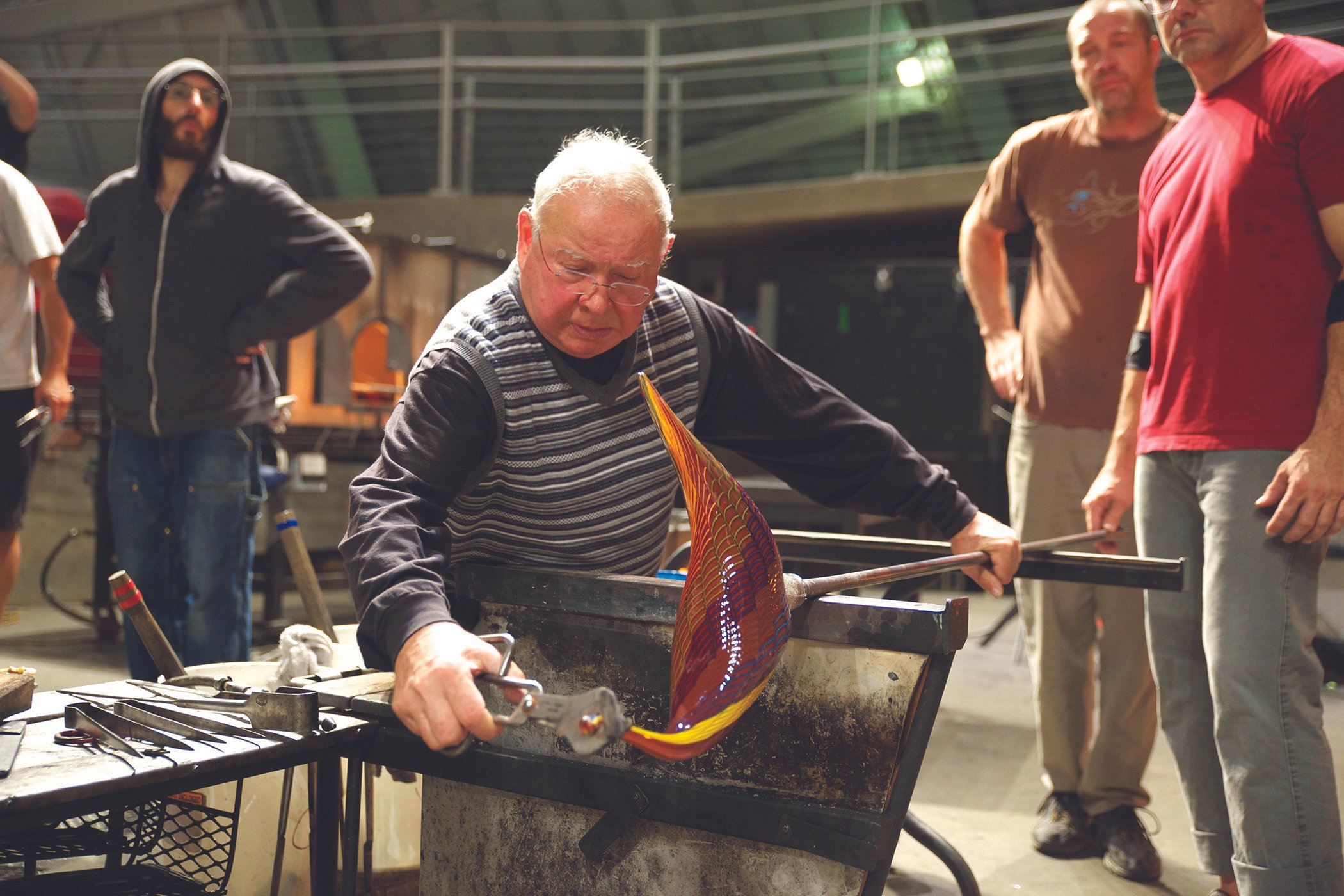
Photo by Ken Emly.
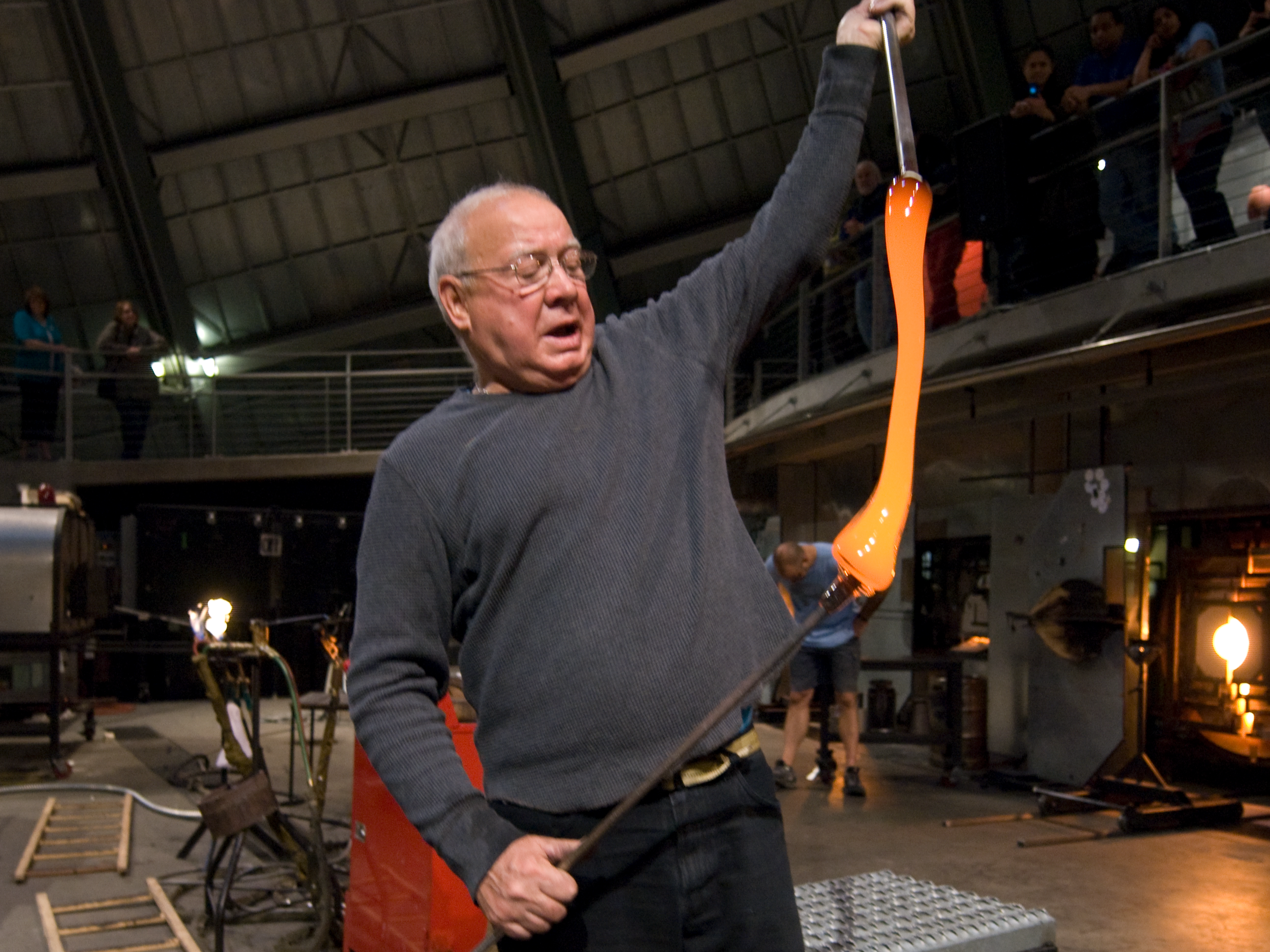
Photo by Steven Vest.

Photo by Russell Johnson.