Safeguarding Fragility: Collections Care During Renovation

Museum of Glass Curatorial Team
By Rebecca Engelhardt, Collections and Exhibitions Director
As regular museum visitors know, each time an exhibition changes, the Curatorial Team deinstalls and resets a gallery. For this renovation, however, everything had to be cleared from all galleries and relocated to temporary storage, including all pedestals and vitrines. Each item was protected and tracked to be available once renovations are complete. Our team moved 172 vitrines to off-site storage and removed 151 pedestals from the construction path—even the walls had to get out of the way!
As the Museum undergoes renovation, we remain committed to upholding the highest standards for the care of our Collections. Throughout this process, we have focused our attention on how to mitigate the effects of construction-related vibrations, such as heavy demolition or vibratory pile driving, through a series of careful precautions.
Prior to construction, we consulted colleagues who have addressed similar challenges. We are grateful for the guidance from Arne Johnson, a specialist in vibration analysis and control in museum settings; Dr. Bill Wei, whose research focuses on effects of vibrations and mechanical stresses on the condition of fragile works of art; and Megan Harvey, Collections Manager at Auckland War Memorial Museum. Their expertise informed our planning and helped establish safety thresholds for the project.
When you visit the Museum now, you will notice that our first line of defense was to remove many objects from view. Approximately 1,350 objects from the Permanent Collection were relocated to secure off-site storage. Each object was meticulously packed, labeled, and tracked to its temporary location.
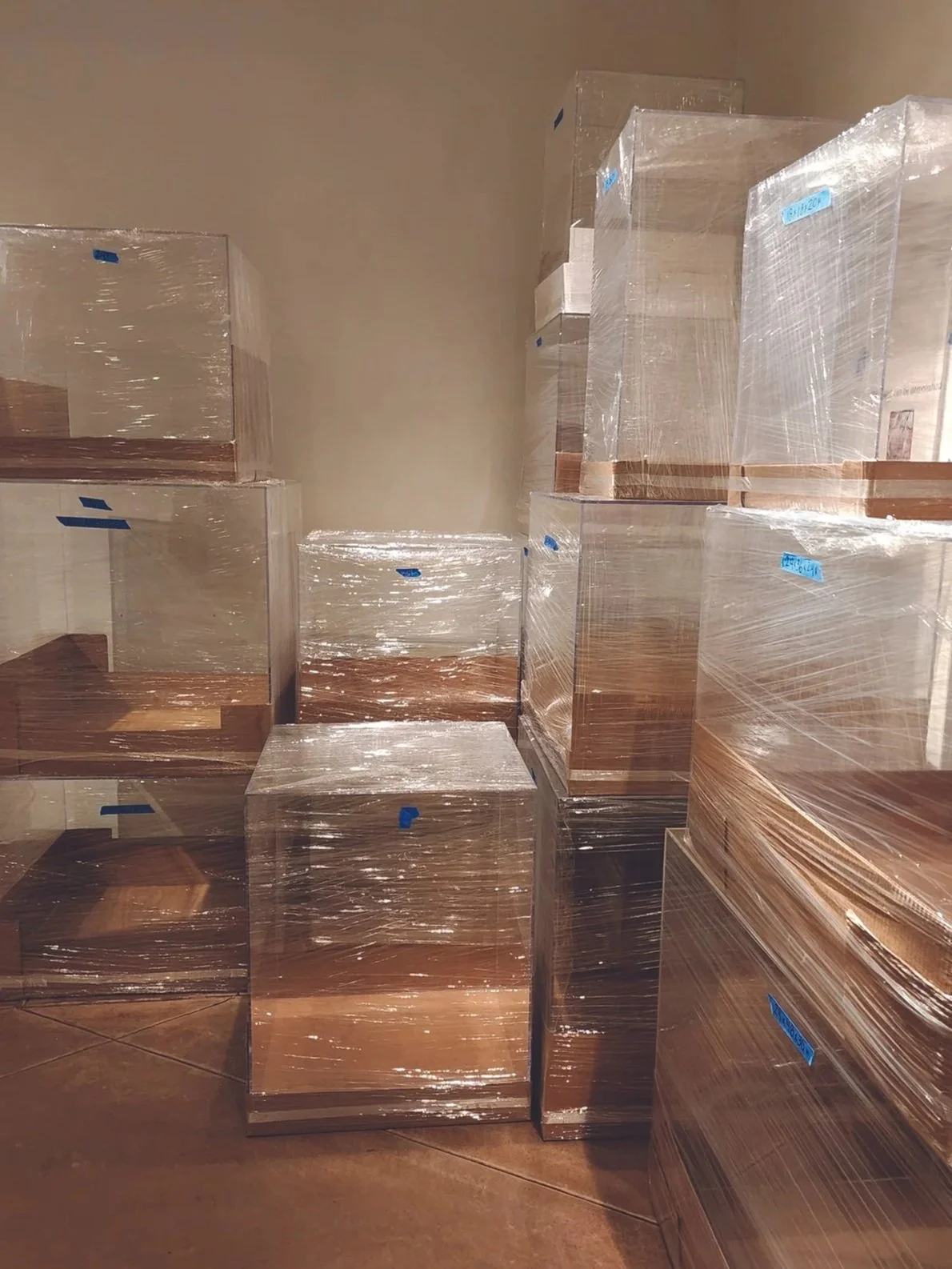
Vitrines wrapped for storage
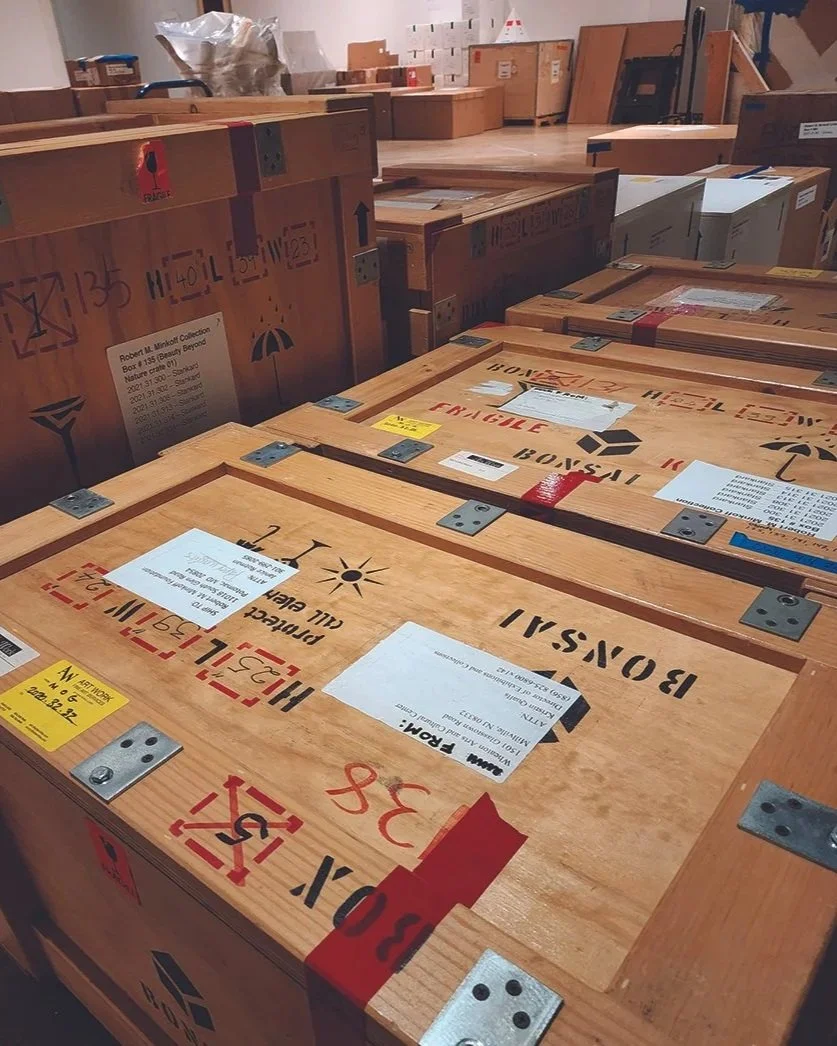
Artwork crated for transport
Some artworks required more complex planning. For example, our treasured Gathering the Light by Cappy Thompson was given a little break, and it too was temporarily relocated. Alongside our very skilled colleagues from Art Work Fine Art Services, we packed the piece into three custom-built crates. Each one, weighing over 900 lbs., was removed from harm’s way by gantry and forklift.
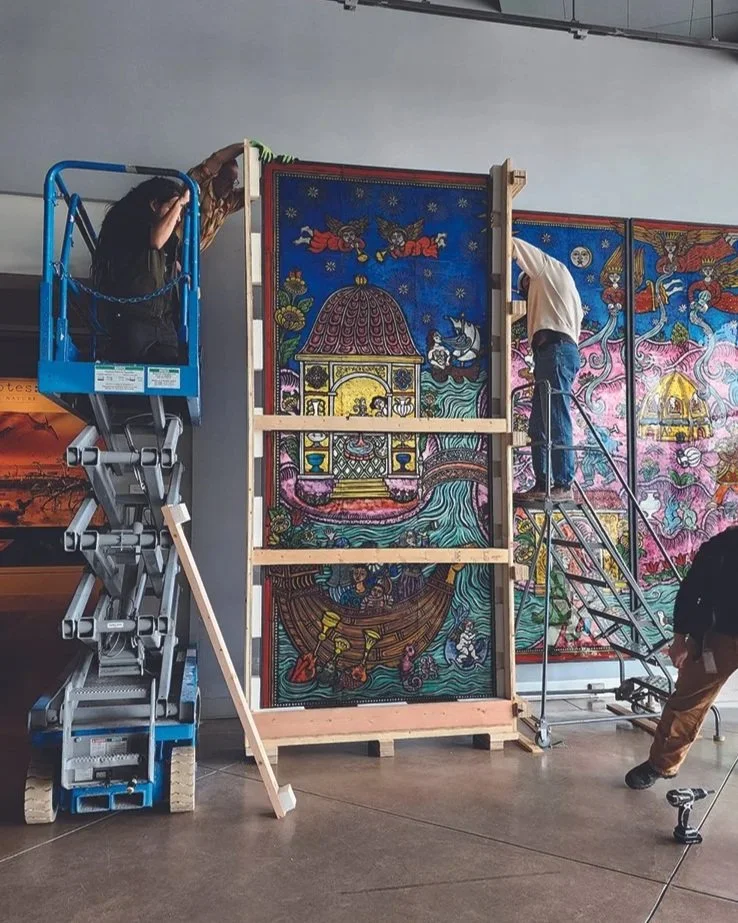
Gathering the Light deinstallation
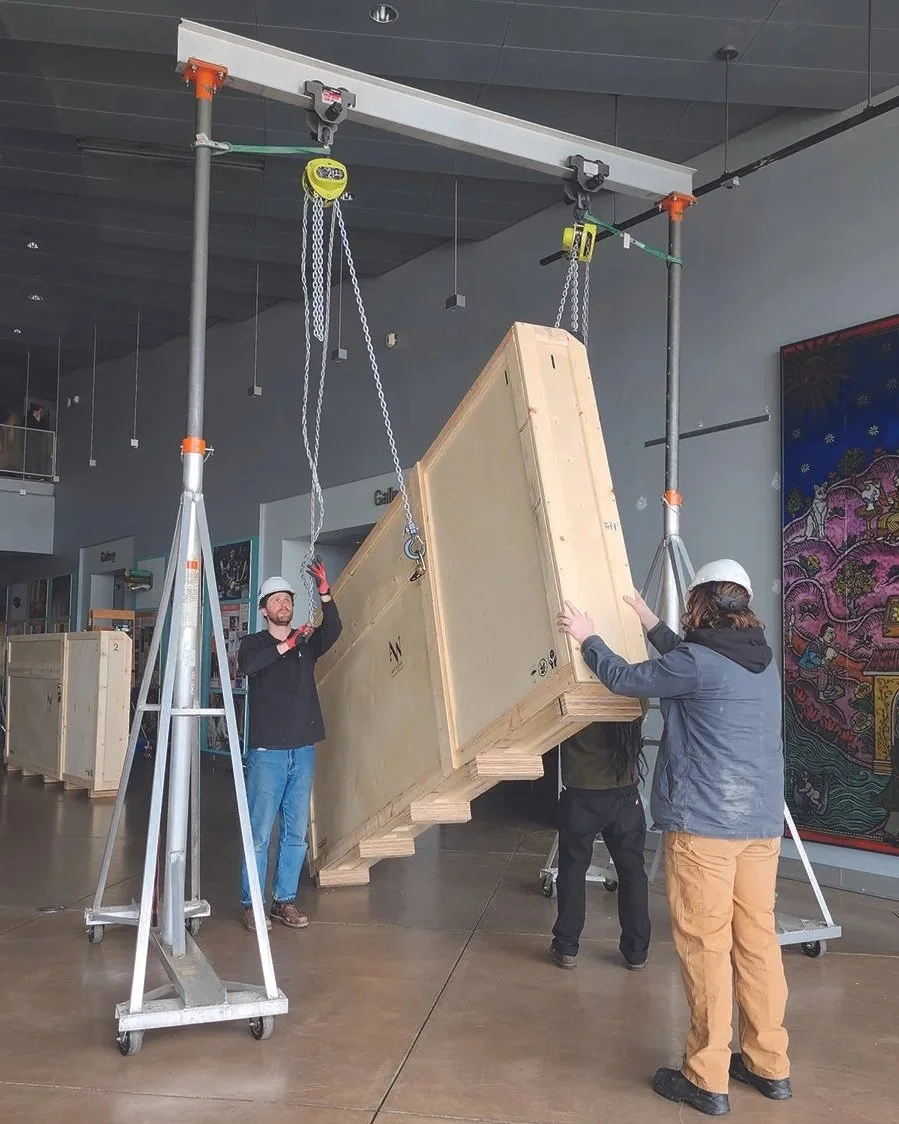
Gathering the Light deinstallation
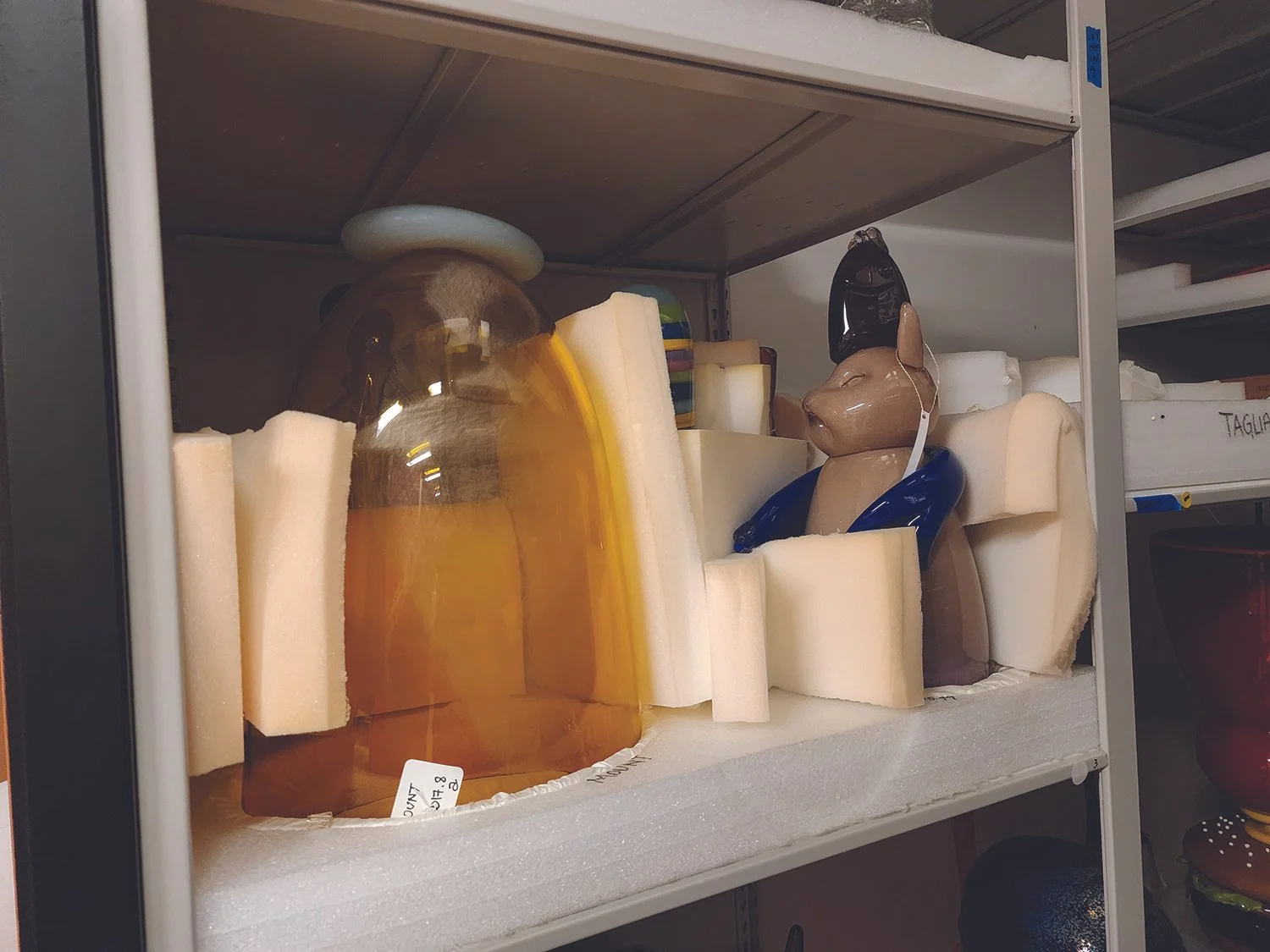
For the 1,350 objects that remain on-site, we conducted detailed stability assessments and introduced additional protective measures as needed. Objects in storage are already safely nestled into foam cavities that prevent movement during seismic events; supplemental cushioning and bracing was added to further reduce possible vibrational impact.
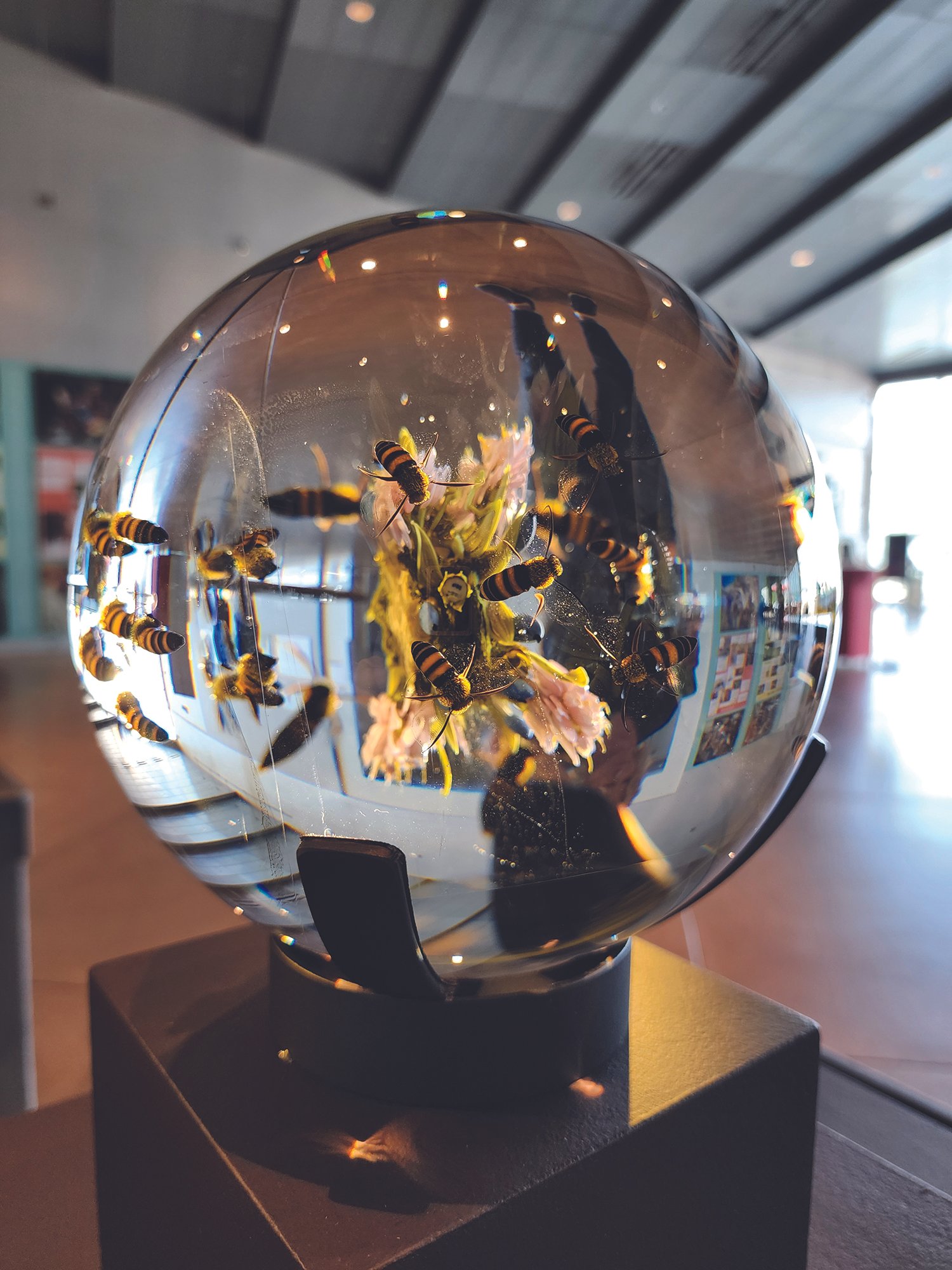
Artwork on display at Museum of Glass is routinely secured using a low-tac adhesive called Rhoplex N580, which helps mitigate the risk of damage from seismic activity or incidental contact with high-visitor traffic. Therefore, this method is a good choice when considering vibrations from construction. Next time you are in the Museum, look closely at the display case that holds the Orbs made by Paul Stankard. These objects are round and require special attention regarding their vulnerability to movement. Therefore, custom mounts were designed and fabricated by our skilled Hot Shop Technician Nick Davis to ensure their stability.
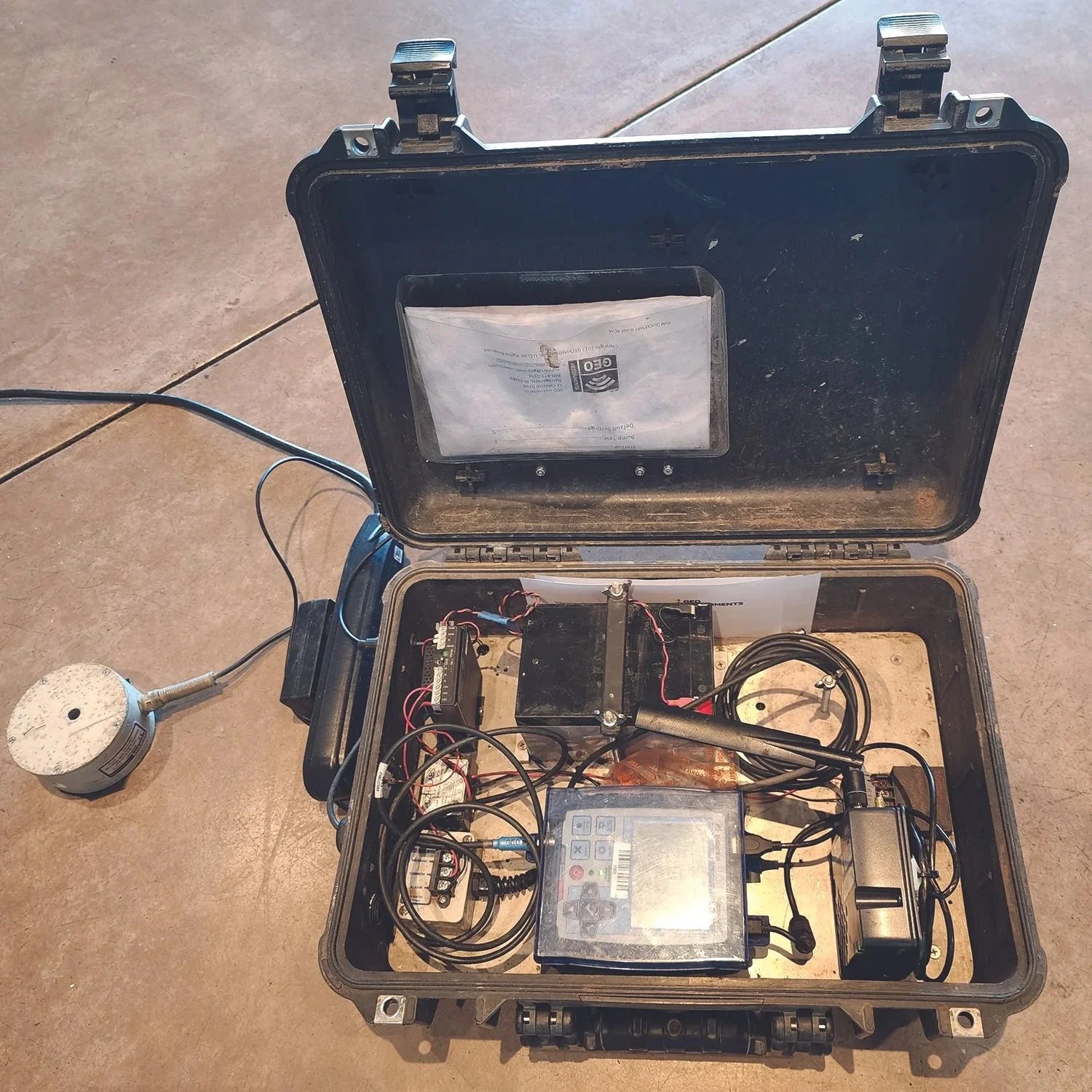
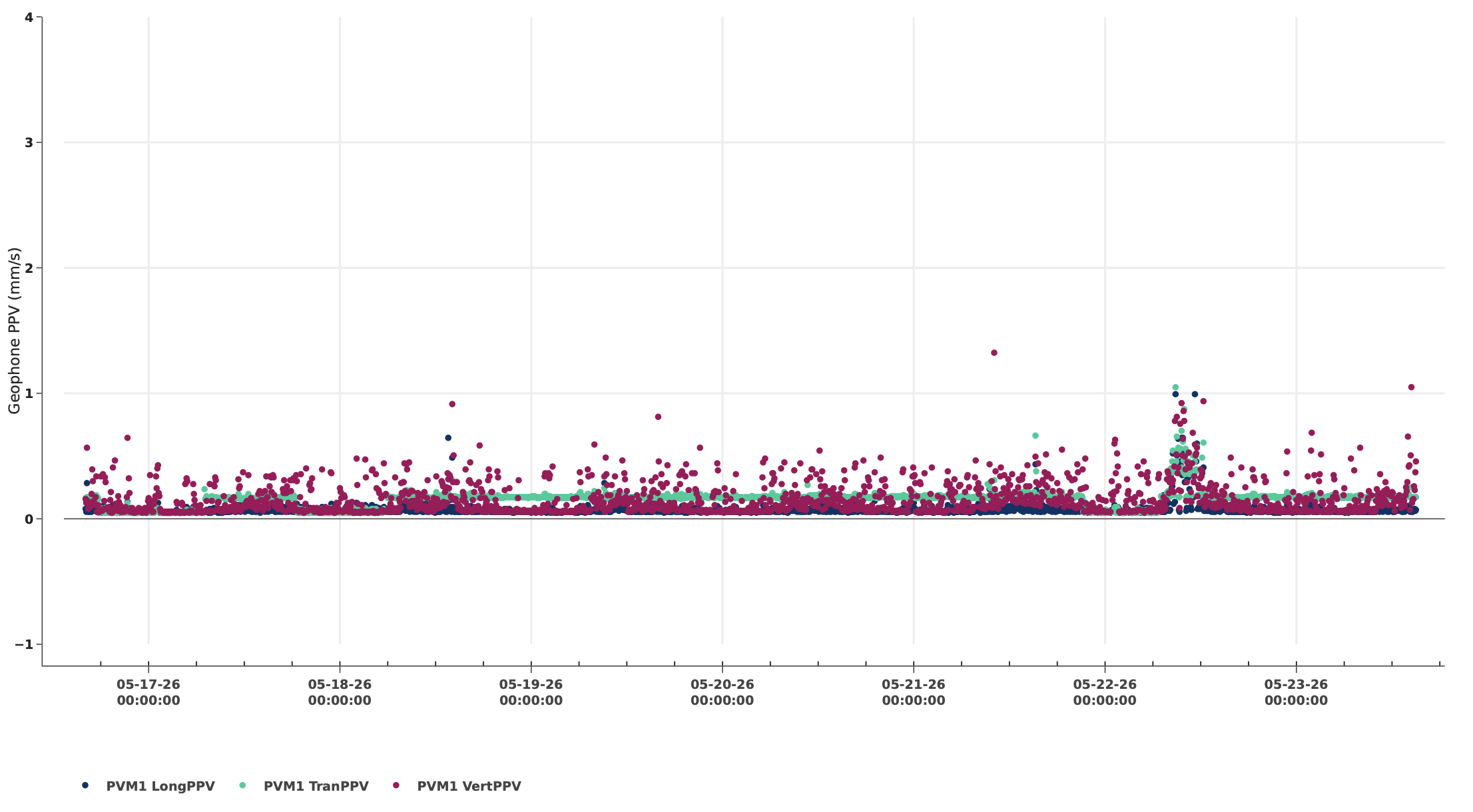
To confirm these protective strategies are effective, we implemented continuous vibrration monitoring throughout the building using “Triaxial Geophones” provided by Geo-Instruments. Four strategically placed units measure the X, Y, and Z orthogonal (perpendicular) axes of the complex vibrations as they hit a sensor (silver disk) and transmit real-time data to key project personnel, ensuring the protective measures are adequate. Museum construction is a special project for Geo-Instruments, as they often can be found monitoring construction activities such as blasting, excavation, pile driving, and tunnel driving on projects such as bridges, airports, or tunnels.
At the completion of the renovation, we will begin moving and tracking the Permanent Collection objects from off-site storage to their new home and securing each work into its newly customized cabinet. Although this process will take months, it will result in an improved and stable environment for the long-term preservation of the Collection.