Invisible Work, Visible Impact: Upgrades to Museum of Glass Galleries and Collections Storage
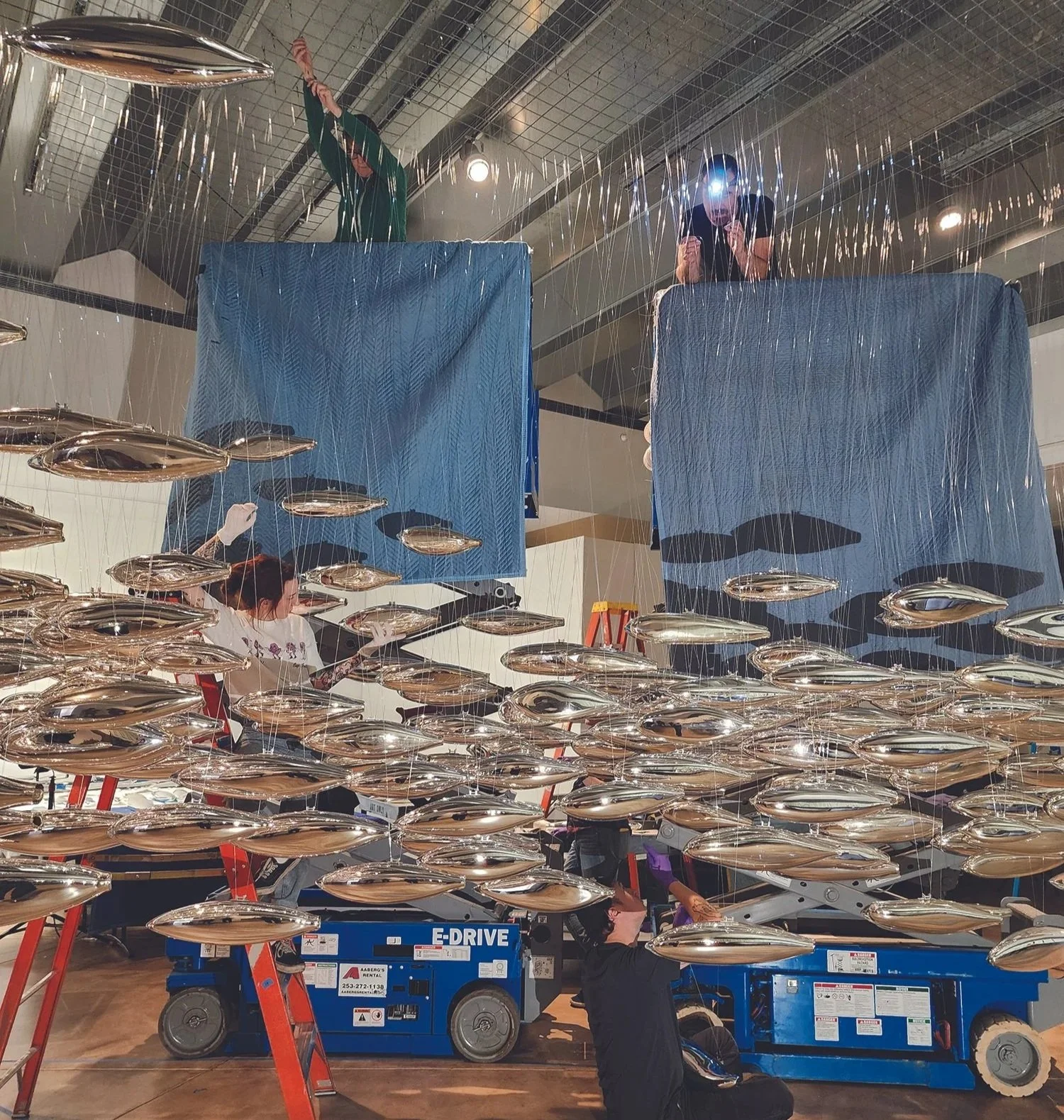
Installing The Salmon School, 2023
By Rebecca Engelhardt, Collections and Exhibitions Director
We thank you for your patience as we await the return of exhibitions to Museum of Glass galleries. We are eager too, as this phase of our capital improvement project brings upgrades and modernization to the infrastructures that house the heart of our Museum—our artwork.
Following the design direction of James Carpenter Design Associates and Studio Unseen Light PLLC, the visitor flow of the gallery experience has been reimagined to create a new single-entry gallery that will set the stage and draw visitors into the exhibitions. Upon reopening, you will discover the previously underutilized theater has been converted into an additional gallery. This allows us to maintain our rotating exhibition program while creating a space dedicated to the legacy of Lino Tagliapietra. The addition of two significant installations by Tagliapietra in the Grand Hall, highlighted by customized lighting systems, will further honor the legacy of the maestro.
Within the galleries, improvements will focus on modernizing the existing infrastructure used by the Curatorial Team to create exhibitions. The current stainless-steel ceiling and light tracks will be replaced with an open ceiling. The uniform grid of structural supports will allow for sound, video, and lighting equipment to be discretely positioned and adjusted, as well as better facilitate the installation of hanging artworks. If you have never looked up to the ceiling before, the need for these updates may not be immediately apparent. Think of projects like The Salmon School; in preparation we had to design and install the support structure before we could hang the art, adding time and complexity to the project. The new ceiling configuration will support these installations anywhere in the galleries.
While our Exhibition Designer, Lynette Martin, is a wizard at lighting design, the new system will provide her with a more versatile set of tools to realize her vision. For each exhibition, she repositions and refocuses lighting to create the right conditions for each object. The new system will streamline her work through fixture monitoring, improved color rendering index (more accurate color), and fewer bulb changes—eliminating the need for improvised techniques. Installed on the continuous network of light tracks, the new system will provide more consistent coverage throughout the galleries, eliminating dark corners. And, the energy-efficient LED system will reduce energy use.
Reflecting an expanding role of technology in contemporary exhibition practice, the gallery upgrades support the integration of projection, sound, and other audiovisual media through galleries. The ceiling offers an organized and unobtrusive solution for equipment and cables that were formerly installed in a visually awkward manner. A new DMX (Digital Multiplex) lighting system introduces the ability to integrate theatrical lighting effects. A robust data network will centralize management of technology and ensure more reliable control of digital systems throughout the galleries.
The Curatorial Team is thrilled about a secondary lighting system (house lights). Although not immediately apparent to visitors, this system provides general illumination during exhibition changeovers and day-to-day operations, eliminating the need for temporary lighting. As an added benefit, it serves as a reliable standby in the event of emergencies.
The Museum is entrusted with the ongoing stewardship and preservation of all artworks in its care—whether part of the Permanent Collection or on loan for exhibition. Achieving this requires careful attention to many factors, including the maintenance of a stable, low-humidity environment—critical for the long-term preservation of glass. Such conditions help prevent the deterioration of soda-lime glass (known as devitrification), the primary material in our Museum. Currently, the Museum’s HVAC (heating, venting, and air conditioning) infrastructure, now nearly 25 years old, has reached the end of its reliable lifespan. Replacing this system is a key component of the renovation and essential to safeguarding the collection by ensuring consistent, stable environmental conditions.
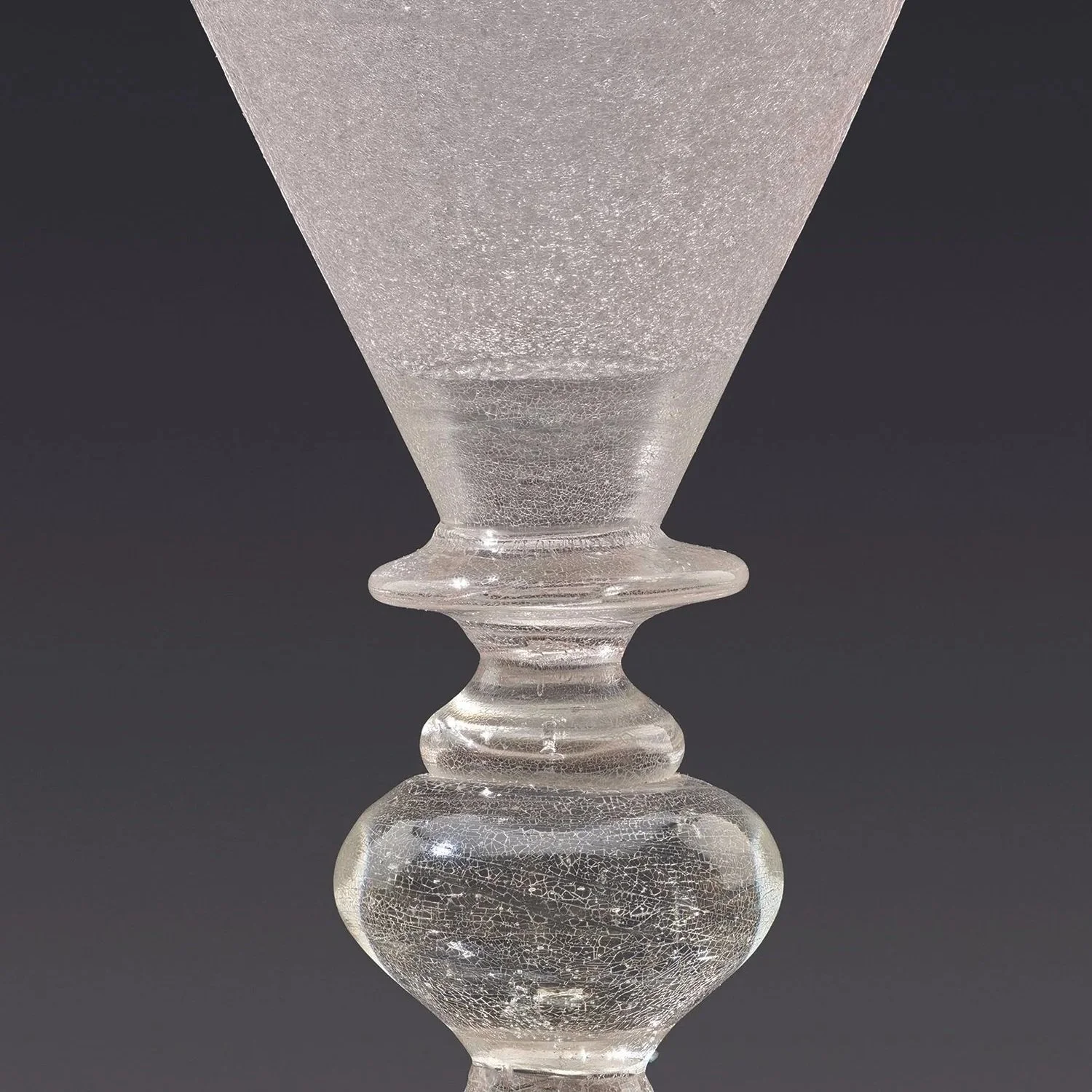
Example of advanced devitrification in a wine glass, seen as a network of fine cracks
Opened in 2002 as a non-collecting institution, Museum of Glass was designed and built without a dedicated art storage vault. Following a transformative decision in 2007, the Board of Trustees voted to authorize the development of a Permanent Collection. The Collection began with 150 objects, mostly collected through the Museum’s Visiting Artist Residency Program. These artworks were housed in specialized cabinets in a modified multi-purpose prep room. Fifteen years later, the Collection has expanded to over 2,700 objects, represents 176 years of glass history, and continues to grow. Now, for the first time ever, the Museum is building a dedicated art storage vault! This room will be outfitted with compact storage units where each object will be safely housed in customized foam “nests” required for safe storage of glass in seismically active zones like the Pacific Northwest.
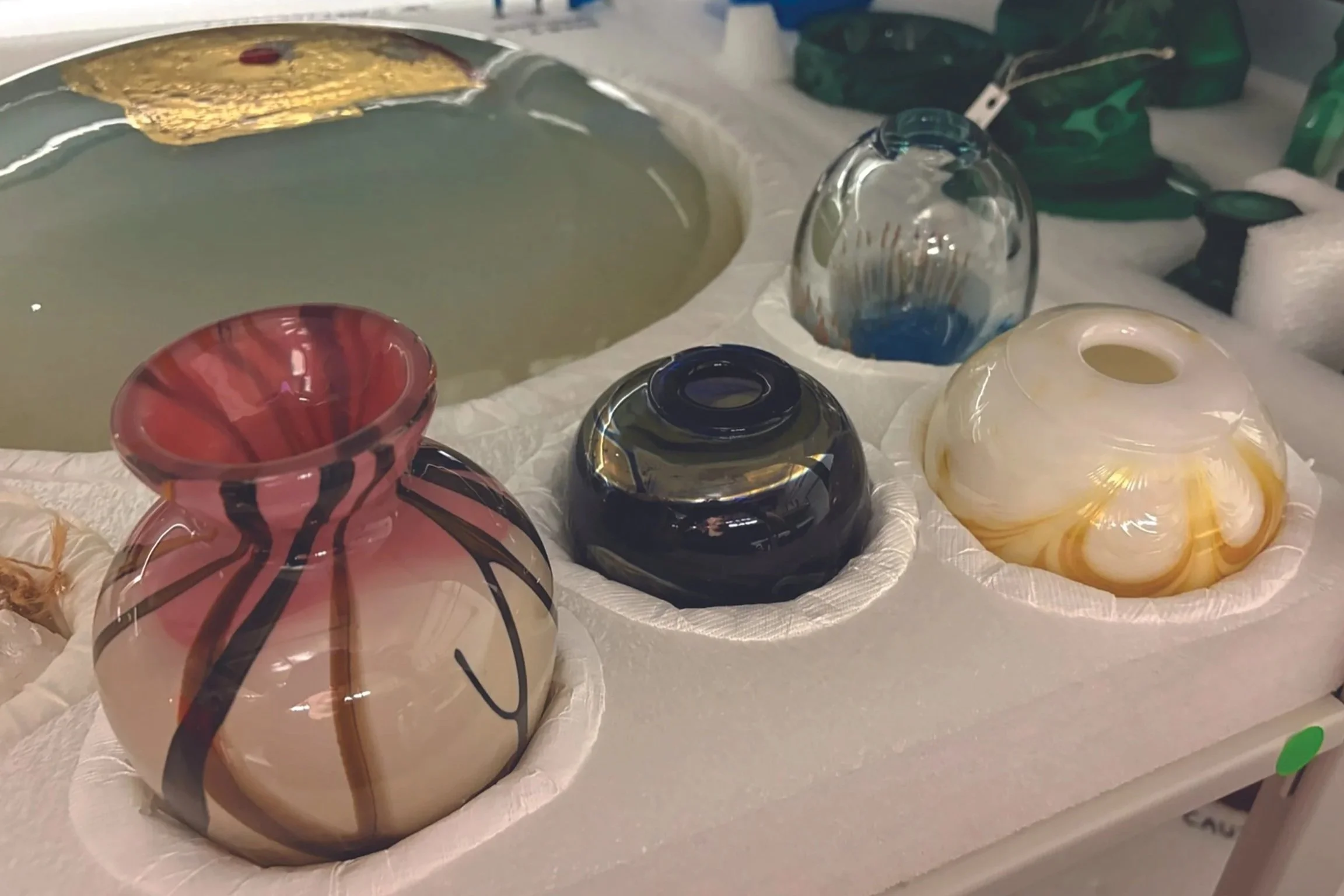
Glass in foam cavities